The literary expression of self-entwined-with-environment that courses through classical texts shows that every action seeds the possibility for perspectival change, and offers the opportunity radically to transform the universe, the group, and the individual, through myth making, and in the interrogation of where power (words, syntax, systems; fear, love, creation, destruction) is located — or locates itself.
Category: Doing research
Three great luminaries…(or, ‘how I wrote the book’), Part V
VarroVerse, the fourth publication: Romespeak...(conferences etc., 2010-2015) ‘Varro’s Romespeak: De lingua Latina’. In Butterfield, D. (ed.) Varro Varius: The Polymath of the Roman World, Cambridge Classical Journal Supplement 39. Cambridge, pp. 73-92. ISBN 9780956838148* With publication for 'the book' imminent (a day in May 2019, folks!), I thought it was the ideal moment (a wet, … Continue reading Three great luminaries…(or, ‘how I wrote the book’), Part V
Three great luminaries… (or, ‘how I wrote the book’), Part IV
VarroVerse, the third publication: Varro, and the Red Queen problem... (2010-2015) ‘Urban flux: Varro’s Rome-in-progress’, in The Moving City: Processions, Passages and Promenades in Ancient Rome. In Östenberg, I., Malmberg, S., and Bjørnebye, J. 2015 (eds.). London: Bloomsbury, pp. 99-110. Background In 2010 I received an intriguingly well-timed invitation from Ida Östenberg, Simon Malmberg, and … Continue reading Three great luminaries… (or, ‘how I wrote the book’), Part IV
Three great luminaries… (or, ‘how I wrote the book’), Part III
VarroVerse, the second publication: Rome, movement, language, and Varro (2008-2011) ‘Movement and the Linguistic Turn: Reading Varro’s de Lingua Latina’. In Laurence, R. and Newsome, D. J. 2011 (eds.) Rome, Ostia, Pompeii: Movement and Space. Oxford: Oxford University Press, pp. 57-80. Background Some might argue that I’ve written these blog posts out of sequence. I say, stories … Continue reading Three great luminaries… (or, ‘how I wrote the book’), Part III
Three great luminaries… (or, ‘how I wrote the book’), Part II
VarroVerse, the first publication: Cultural Memory and Varro (2009-2011) ‘“῾Ρωμαίζω… ergo sum”: becoming Roman in Varro’s de Lingua Latina’. In Bommas, M. (ed.) Cultural Memory and Identity in Ancient Societies. London: Continuum, pp. 43-60. Background In 2009, the Department took cultural memory* as a research theme, and I was invited to give a paper as part … Continue reading Three great luminaries… (or, ‘how I wrote the book’), Part II
Three great luminaries…(or, ‘how I wrote the book’), Part I
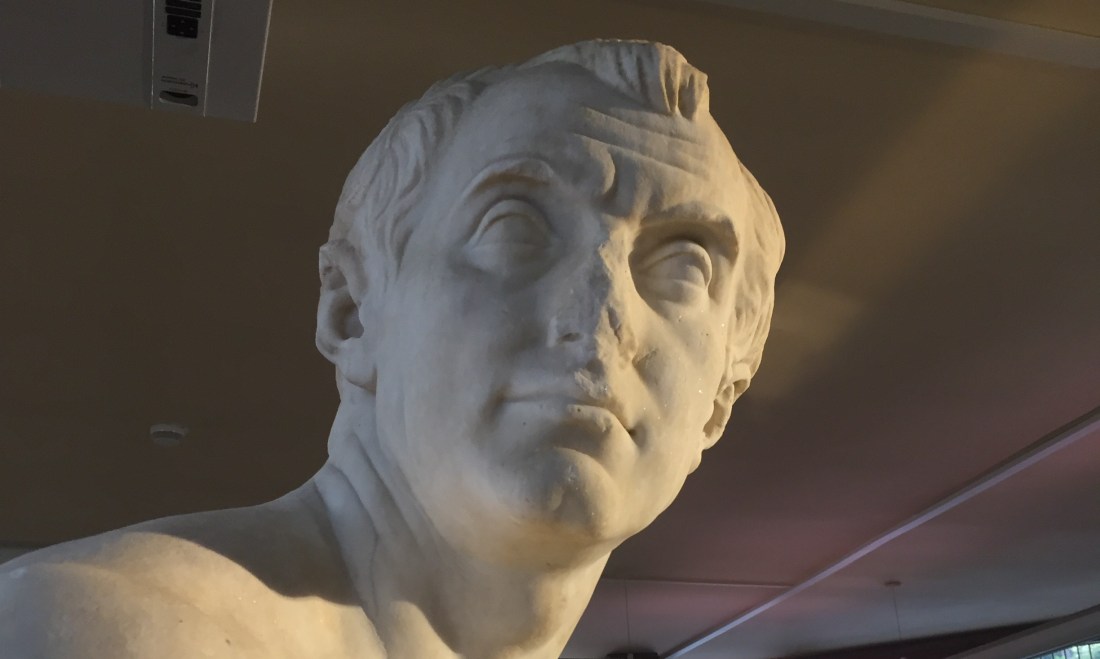
[M. Terentius Varro] Any discussion of the Roman Republic will sooner or later turn to figures such as Cicero and Julius Caesar, but this was an era of complex characters well equipped with great ambitions. It was also a time of intense creativity, and its volatile politics reflected a cultural upheaval that was as exciting … Continue reading Three great luminaries…(or, ‘how I wrote the book’), Part I
Diversitas et Multiculturalismus
Because this extensive and thoughtful piece says everything I'd say, but better.
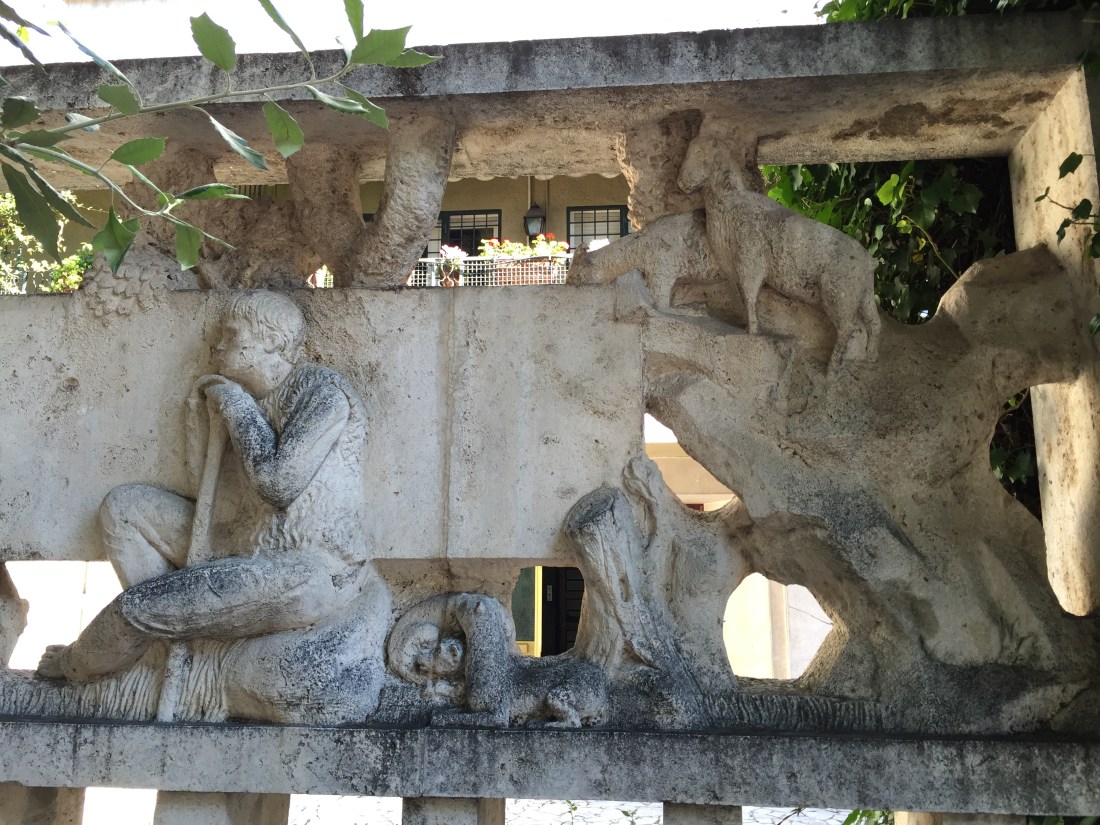
Shepherding thought (and a coda from Varro)
I love the frisson of terror that live theatre produces. For me, in the audience, it's as thrilling as a high-wire act to see people transformed by stepping into performance space, becoming something entirely other to their everyday selves. Will that transformation stick? Will I suspend or wallow in my disbelief? Will some element of the … Continue reading Shepherding thought (and a coda from Varro)
Ovid’s Garden: Digging!
Miriam's amazing "Ovid's Garden" project, located at Winterbourne House & Gardens (University of Birmingham) represents a laboratory space for her PhD on Classical echoes in Italian Renaissance gardens, and also an imaginative way for enthusiasts to help shape a cutting-edge research project here in Brum. Brava, Miriam!
Classicising modernity
Last week I was lucky enough to attend a provocative and thoughtful discussion of the relationship between classical Greek tragedy and the development fascism in Italy, Germany, and Greece. The speaker was my wonderful colleague Eleftheria Ioannidou, and the occasion, our fortnightly Classics, Ancient History and Archaeology research seminar (all are welcome!). The full title of the paper … Continue reading Classicising modernity